Posts
Posts


Aboru Aboye Aboshishe,
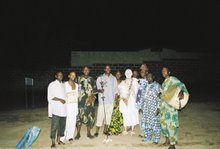
Here is a wonderul taping of the 2008 Isese day in Nigeria. Some good explanations, including the Yoruba calendar New Year! Plus several other clips of different parts of the Isese day...
second part (you'll see trad Y dobale)
Notice in the third section, Ifa, Sango, Obatala and other Orisa worshippers working in harmony on Isese day!! and a casting of Obi kola
Ase o!
Marcos Ifalola
Thursday, March 12, 2009


Monday, February 9, 2009
Heretical treatise on hierarchy within the Orisa priesthood
Aboru Aboye Aboshishe,
This week I was in Rome, and while sitting at a Papal audience, I began to contemplate what it means to be a priest, what it means to be “holy” and the role that initiations play in our status in our religious community and society at large.
I start this by saying that what I propose here might make sense to some, seem radical to others, and heretical to possibly a large portion of the Orisa community. That said, I feel it’s my responsibility to propose these thoughts, if nothing else, so that people might take a second to think about what it is they believe and perhaps decide for themselves whether to continue their path, or refine what it means to worship, and what roles different people play in the process of worshipping the Divine.
I should first begin by laying out my definition of Orisa priest (Olorisa or Babalawo). In my mind, after many years of study, and further 12 years now as a priest (4 as Awo Ifa), I believe the primary role of the priest is to act as an intermediary between the laity (believers who are non-priests) and the Orisa (who are ultimately our closest link to Olodumare). In that role as intermediary, it is our responsibility to open the portals of communication, be it through Oracle, trance possession or acts of nature. We must then accurately interpret those Divine messages, deliver them to those who need to receive them, and where necessary, prescribe the actions or offerings necessary to align followers with their path in life, in order to give them Ire (blessings).
We are only intermediaries, and through our initiations, our minds are opened and our abilities to act as intermediaries are awakened so that we may serve the Orisa. Initiation is, in effect, the act of submitting to the will of Olodumare.
And yet, in both traditional Yoruba Orisa worship, and Lucumi Orisa worship, priests and lay-people alike get mired in the technicalities of seniority and status, forgetting that as intermediaries it is our actions, our ethics, our knowledge and most importantly our character that truly determines our seniority and status within the religious hierarchy.
I have myself seen the pomp and circumstance given to a chief, priest or elder in Yorubaland, who would see nothing wrong in taking graft, charging the poor outrageous fees for their services, selling titles or not doing initiations properly because they know the “client” won’t return. Equally I have seen Lucumi adherents and priests quibble about who’s older, who should dobale to whom, give unnecessary expensive cleansings or initiations or argue about which priest should be praised first with a ceremony.
Who bows to whom, who is the first to speak, who one’s godparent is, who gets a “tambor” first, these are simply constructs of the ego, concerned more with the self, and self satisfaction than with acting as the intermediary between the profane and the Divine.
I go one step further in my definition to say that the idea that the priest acts as anything more than intermediary, or midwife during the process of Dosu/Kariosha is absurd. The “godparent” does not give birth, though it can be said that the Iyawo has been re-born. There is not a single moment in all of the lucumi Kariosha ceremony in which the priest spiritually or otherwise gives birth. They simply act as intermediary or midwife, by spiritually passing the Ase of the Otanes to another set of Otanes. And through ritual, prayer and sacrifice take the Iyawo through a rebirth of their own, in which their Eledaa/Ori is awakened, and the connection between Eledaa/Ori and Orisa is opened so they too may become intermediaries between non-priests and the Divine. Ifa even tells us that the idea that the godparent is essentially a “parent” is false. In a portion of the Odu Oworin Irete, where Abeshujiyan imparts three pieces of wisdom, for which he names his three hair patterns, the third he is:
“Guardianship does not equal parentage
Another person’s child cannot be like a child from one’s bowels”
“Agbabo o jo onbi
Omo olomo o lee jomo taa bi ninu eni”
Which is proven later in the Odu when Abeshujiyan is about to be sentenced to death, and his adopted child asks that his cloth be removed so that the blood from the execution he will watch does not stain it.
“Let us set him free
If this boy had been his son truly
And not an adopted child
Would he say his fathers blood should not be allowed to spill on his cloth?
Can’t we all see truly that a Guardian does not equte a parent
Another persons child can not be like a child from one’s bowels”
E mo jee ki awon o lese lorun
E je ki awon o file
Oba ni nje bob a je pe omoo re to bi nnu ni omo un
Ti kii she omo to gbawo
Se jo pee ki ejee Baba oun o mo ta si asho oun
Omo olomo o jomo eni looto
Through the wisdom of Odu, Ifa teaches us:
Initiation alone does not give one character.
Initiation alone does not give one knowledge.
Initiation alone does not give one seniority.
Initiation alone does not make one a true priest.
Ifa tells us in the Odu Iwori Meji:
Iwori teju mo ohun ti nse ni
Bi o ba te Ita tan
Ki o tun iye e re te
Iwori teju mo ohun ti nse ni
Awo, ma fi eja igba gun ope
Iwori teju mo ohun ti nse ni
Awo, ma fi aimowe wo odo
Iwori teju mo ohun ti nse ni
Awo, ma fi ibinu yo obe
Iwori teju mo ohun ti nse ni
Awo, ma ji kanjukanju jaye
Iwori teju mo ohun ti nse ni
Awo, ma fi warawara mkun ola
Iwori teju mo ohun ti nse ni
Awo, maseke, sodale
Iwori teju mo ohun ti nse ni
Awo, ma puro jaye
Iwori teju mo ohun ti nse ni
Awo, ma se igberaga si agba
Iwori teju mo ohun ti nse ni
Awo, ma so ireti nu
Iwori teju mo ohun ti nse ni
Awo, ma san bante Awo
Iwori teju mo ohun ti nse ni
Awo, bi o ba tefa tan
Ki o tun iye e re te o
Iwori teju mo ohun ti nse ni
English
Iwori take a critical look at what affects you
If you undergo Ifa initiation (Itelodu)
Endeavor to use your wisdom and intelligence
Iwori take a critical look at what affects you
Awo, do not use a broken rope to climb a palm-tree
Iwori take a critical look at what affects you
Awo, do no enter into the river without knowing how to swim
Iwori take a critical look at what affects you
Awo, do not draw a knife in anger
Iwori take a critical look at what affects you
Awo, do not be in haste to enjoy your life
Iwori take a critical look at what affects you
Awo, do not be in a hurry to acquire wealth
Iwori take a critical look at what affects you
Awo, do not lie, do not be treacherous
Iwori take a critical look at what affects you
Awo, do not deceive in order to enjoy your life
Iwori take a critical look at what affects you
Awo, do not be arrogant to elders
Iwori take a critical look at what affects you
Awo, do not lose hope
Iwori take a critical look at what affects you
Awo, do not make love to your colleague's spouse
Iwori take a critical look at what affects you
Awo, when you have been given Ifa initiation
Initiate yourself again by using your wisdom and intelligence
Iwori take a critical look at what affects you
In this, and many other Ese Ifa, we are reminded of that character, ethics, proper behavior, intelligence, and most importantly, not assuming initiation in and of itself makes the priest, are critical to understanding the role and responsibility of a priest.
By reminding us over and over throughout the Ese to “look at what affects [us]”, we are reminded of our responsibility to constantly reassess the world around us. Further, there is a reminder to those members of the priesthood who have been given special access to the wisdom of Ifa. It is our responsibility to use our wisdom and intelligence, i.e. don’t assume Ifa will provide the key simply through initiation.
Lastly, Iwori meji reminds of one of the most important yet one of the least stressed concepts for the Awo Ifa, “Initiate yourself again by using your wisdom and intelligence”, it is here where Ifa tells the Awo that initiation alone does not make you a true Awo. It’s only through reflection and contemplation of Ifa that one can achieve an understanding of the initiation one went through, and through analysis and study, self initiation (awareness of the truths of Ifa) can occur.
None of this is to say that we should not respect each other, or that certain priests are not worthy of respect and the rituals/rights that show that. But, initiation alone does not give a priest those rights, they must be earned. The attachment of the role of “parent” and the idea that the priest “gave birth” in the diaspora overemphasizes the mentor/guide role of the priest, creating cults of personality often, though not always, based on little more than performance of initiations and perhaps consultation in which they are interpreting and clarifying the advice of the Orisa for the adherent. These attachments to roles and status are ephemeral at best, and only serve to divert our attention away from the true meanings behind the role of a priest.
So what makes a priest worthy of respect and the actions associated with that respect? Length of initiation means absolutely nothing. In and of itself, how can we give seniority values to the act of initiation, when it is only an enabling act, giving one a title, and the potential to access the Divine. The Odu Eji Ogbe tells us:
We have initiated you into the secrets of Ifa
You should re-initiate yourself
This was how Eji Ogbe was initiated
But he plunged himself into the forest
We have initiated you into the secrets of Ifa
You should re-initiate yourself
If you get to the top of the palm tree
Do not let your hands loose.
Awa te o nifa o
K’o o tunra e te
Tite la t’Eji Ogbe
T’o fi m’ori wo’gbo
Awa te o nifa o
K’o o tunra e te
B’o o d’ori ope
Ma she jowo si
Eji Ogbe, the highest of Odu, went through self-initiation, even after being lead to the sacred grove (igbodu) for initiation (te’fa), he plunged himself back into the forest. This act shows that even an initiate must go back in to the grove in order to teach himself. And, even in this short stanza, Ifa reminds us that even if we reach the pinnacle of understanding and knowledge, our arrogance should take over, lest we let our hand lose and come tumbling down the palm tree.
This excerpt from the Odu Ogbe Ate also supports this idea :
…
Orunmila was the person who initiated Akoda
He also initiated Asheda
He equally initiated Araba
Only Orunmila Abonniregun
Was the person we do not know who initiated
Now, after I have been initiated
I will complement it with self-initiation
All those things that are my taboos
I will surely avoid them
I had been initiated
I will re-initiate myself, by myself...
Again Ifa reminds us not only of the need for self study and initiation only being the beginning of the road, but also another important truth, the understanding of truth, is a solitary act. While others can help guide us along the way, in the end we face truth on our own. The solitary act of insight into the true nature of life is why we must travel the final road to realization alone.
It is through the meticulous study of the rituals, methods of accessing the Divine, theology, philosophy, and Ethics and the appropriate application of those studies that one begins the long road of priesthood. Only after one can successfully access the Divine, and interpret those messages can one begin to earn the title of “Olorisa or Babalawo”.
The Odu Okanran Oturupon reminds us of our need to study in saying:
It is through constantly studying Ifa that we come to understand Ifa
It is through missing the way that we come to know the way
It is the road we have not traveled before that causes us to wander here and there
Ifa ki ko nii mu ni mo Ifa
Ona sisi nii mu ni mo ona
Ona ti a ko rin ri
Nii se ni sibasibo
How can one be considered a preist of Ifa if one does not understand Ifa? How can one understand Ifa simply by being initiated into Ifa? In order to be a priest one has to understand, and if understanding can only come through studying, how can someone who has simply undergone initiation be considered a priest? While ultimate understanding eludes us, we can only come to understand through study, and so without study, we are priests of nothing.
On Character/Ethics
There are a multitude of ese Ifa on character and ethics, but here are some that I believe stand out. In Ogbe Sooto (Ogbe Osa) Ifa says:
Ifa a Babalawo is in grave want
Let him like not
If an herbalist is in need
Let him not be dishonest
Let no one lie or display dishonesty
Because of accountability when he dies
This is the declaration of Ifa for Orunmila
When unknown people (pretenders) waged war against him
Orunmila was asked to offer sacrifice
He complied
Now all you protestors
You have all been exposed
I now know the python
Which resembles the cobra
I now recognize the rattle snake
Which looks like the boa constrictor
I can now see through Iwowo Ereke (impersonator)
Who pretends that he is Orunmila himself.
Bi oju ba npon Babalawo
Ki Babalawo ma puro
Bi oju ba npon Onishegun
Ki Onishegun ma shera
Keni ma sheke shera
Nitori ati sun awo
Difa fun Orunmila
Nijo ti eni Aimo wa nko ogun ja Baba
Won ni ki Baba rubo
Nje eni Aimo
Emi ma wa mo yin o
Emi ti mo monu-monu
To finu jo Oka
Mo ti mo Agbadu
To tinu jo Ere
Mo ti mo iwowo-Ereke
To finu jo Barapetu
Ifa here warns both layity and priests twofold . First that our ethics must be of the highest standard, and that we not lie in order to get our way as priests. It’s no matter whether that be to assert power, manipulate others for our own gain or to make money. In the end, we will be judged. But even more important, Ifa reminds us to not mistake one thing for another, and to not mistake the priest for Orunmila himself! Beware of priests who begin to mistake themselves as Orisa. In this Odu, Ifa makes it clear that the comparison may be subtle, both snakes but of different types, one may not say outright they think of themselves as Orisa, but their actions belie their true feelings. We priests are not Orisa incarnate on earth, we are humble servants, to think or act otherwise is nonsense.
What Ifa does teach us is to respect everyone regardless of status, without that respect, how can one claim the title of priest? In Osa Meji Ifa says:
The head of a person with a bad future does not swell up
No one can recognize the footprints of a madman on the road
And, no one can distinguish the head of an honorable person in an assembly of people
This was the theaching of Ifa for Mobowu
Who was the wife of Ogun
Surely, the head that will wear the crown tomorrow
No one can recognize it
Therefore, let husband and wife stop calling each other names
And stop talking foolishly to each other
For the head that will wear the crown tomorrow
No one can tell which one it will be
Ori buruku kii wu tuulu
A ki i da ese asiwere mo loju ona
A ki i m’ori oloye lawujo
A difa fun Mobowu
Ti i se obinrin Ogun
Ori ti o joba lola
Enikan o mo
Ki toko-taya o mo pe’ra
Won ni were mo
Ori ti o joba lola
Enikan o mo
Aside from reminding us that we never know when we will need help from someone, or who that will be, Ifa is clear that we also do not have foresight. The leaders, and likewise madmen, of tomorrow are not known today, so from a practical standpoint, we should treat all people respectfully.
The question of character and its affect on the priesthood is even more profoundly addressed in the Odu Ofun Otura where Ifa states:
The liar casts the Kola nut and it yields a bad omen
the commitment breaker casts the kola nut and it does not yield a good result
But the good hearted person casts the kola nut and the result is clearly promising
Eke pa bi, o di
Odale pa'bi, ko yan
Oninure pa bi, o ye peregede
Priests make a commitment to uphold and protect Orisa/Ifa and their principles, so priests who have broken this commitment when casting a tool of divination (this case kola nut, but again Ifa is metaphors, so to me, any form of divination, including Ikin Ifa or cowries) will not yield a good result. This means that the state/character of the diviner IS in fact important to the result, and affects the outcome of divination. If that is the case, how can one give seniority let alone respect to priest with no character.
Further, the prayers and action of the priest before divining are designed specifically to awaken the voice of the Orisa, if not done properly, the objects used to divine remain just that, inanimate objects and not conduits for the Divine word. It's important to remember the if consecration was the only thing that make Ikin or Dinlogun/Cowrie "speak" the priest wouldn't have to pray or do anything, simply cast and go.
These are just a few of the many ese Ifa that deal with character, pointed out to show that without character, the title of priest and respect that goes with it, are meaningless.
On Age/Wisdom
Whether the age is counted in years of initiation or years on earth, age alone does not make a priest. Though, we can certainly deduce that while age doesn’t guarantee wisdom, without age (years on earth) wisdom can’t be fully attained. This is why in Yoruba culture, years of initiation can never outweigh years on earth, so it would be absurd to see a 45 year old dobale/kunle to a 20 year old, regardless of their years as a priest. Also of note though, is that years on earth and “eldership” does not guarantee character (or wisdom for that matter. The Odu Ogbe Iwori says:
Bad conduct is what is attributed to youth
Bad character is what is attributed to elders
Ishekushe l’ewe le she
Iwa ihukuhu ni ti agbalagba
Ifa explains that in our youth, when we do something bad, the action comes from not knowing better. As an elder, life should teach us to know better, so when we do something bad, life should have already taught us so, and therefore it must come from bad character. Without character, eldership means nothing, regardless of how you measure that time.
Eldership further does not mean that one holds no responsibility to help those that are junior, which is yet another show of true character. Eldership is retained by remembering one’s status, and helping those at a different level, whether it’s age or mental ability. The Odu Oyekun Meji reminds of this by stating:
A child is not tall enough to stretch his hand and reach the high shelf
An adults hands can not enter the mouth of a gourd
The work an adult begs a child to do
Let him not refuse to do
We all have work to do for each others good
Ifa divination was performed for Orunmila
About whom his devotee
Would make complaint to Olodumare
Olodumare then sent for Orunmila
To explain the reason why
He did not support his devotee
When Orunmila got to the presence of Olodumare
He explained that he had done all in his power for his devotee
But that the destiny chosen by the devotee made his efforts fruitless
It was then that the matter
Became quite clear to Olodumare
And he was happy
That he did not pronounce his judgment on the evidence of only one of the two parties.
Owo ewe o to pepe
Ti agbalagba o wo akeregbe
Ishe ewe be agba
Ki o ma she ko mo
Gbogboo wa ni a nishe a jo mbe 'raa wa
A dia fun Orunmila
Eyi ti akapoo re
O pe lejo lodo Olodumare
Olodumaree waa rannshe si Orunmila
Pe ki o waa so idi naa
Ti ko fi gbe akapoo re
Nigba ti Orunmila de iwaju Olodumare
O ni oun sa gbogbo agbara oun fun akapo
O ni Ipin akapo ni o gbo
nigba naa ni oro naa
Too waa ye Olodumare yekeyeke
Inuu re si dun
Pe oun ko da ejo eekun kan
Additionally, this Odu reminds us that eldership is attained and kept by being just and wise. Olodumare seeing two juniors (Orunmila and his devotee) was wise in waiting to hear both sides of the story before pronouncing judgement. This allowed him to realize that not all was as one person might have it seem, and so rendered just judgement.
Ifa tells us in Orangun Meji (Ofun Meji) the eldest of Odu that became the junior of Odu upon descending to earth:
He who breaks a Kola nut (with 4 valves) will eat two valves
An avaricious elder is he who eats three valves
After eating three valves
He carries his load unaided and proceeds on this way
These were the declaration of Ifa to the person at the forefront (the senior/leader)
Who shall later become the person at the very rear (the junior/follower)
He was advised to offer sacrifice
He refused to comply
It is their lack of propriety in manners
It is their lack of diplomacy
The person at the forefront
Had turned into the person at the very rear
It is their lack of propriety and manners
Onpabi nii j’eji
Agba okanjuwa a j’eta
To ba j’eta tan
A gn’eru u re a yaa lo
Dia fun Eni iwaju
Ti yoo deni ikeyin
Ebo ni won ni ko waa she
O koti ogbonhin sebo
Nje aimowa a hu u won ni o
Ai mede e pe e won ni o
Ara iwaji o, lo deni ikeyin
Aimowaa hu u won ni o
Even an elder and leader can lose their status for lack of character, as told my Ifa in Orangun Meji.
On Mentorship
It is the role of the priest to act as mentor and advisor to the devotee, but these are not things which come easily, quickly, or instantly upon initiation. In Otura-Elejin (Otura Ogbe) Ifa tells us:
A child studies Ifa with labor and suffering
When he grows up
He will reap all the rewards
This was the declaration of Ifa to Otura
When he would dip his hand into the boat of success
I dip my hands into the boat
And I pull out all good things of life
When Otura dipped his hand into the boar
He became successful from his sojourn to his home
I dip my hands into the boat
And I pull out all the good things of life
Tishe tiya lomode kekere fi n ko’Fa
Bo ba dagba tan
Nii ri ere e ee je o
Diafun Otura
Ti yoo towo b’ili ni Ishaga
Mo towo b’oko
Mo fa’hun rere yo o
Igba Otura t’owo b’oko
Lo la wale
Mo t’owo b’oko
Mo fa’hun rere yo o
In the story of Orunmila’s creation of the system of Divining Ifa, we are told:
…
Ifa, you are the leader
I am the follower
The leader is he who teaches the follower wisdom
You are the one who teaches one
Just as one’s sibling…
Ifa, iwo lara iwaju
Emi ni ero eyin
Ara iwaju nii ko ero eyin logbon
Iwo loo ko’mo loran
It is as leaders that Ifa wants us to teach Ifa’s followers wisdom, and so without wisdom, character and scholarship how can we accomplish this? If we do not study, we do not show character, we do not show leadership how can we truly call ourselves priests, let alone demand respect and senior status?
I’ll end this with on the somber note created by a stanza from the Odu Eji Ogbe
A o t'okun dokun
ka too ri winni-winni agbe
A o tosa dosa
Ka too ri doodo orun Aluko
A baa t'okun dokun
Ki a tosa dosa
Ka too ri oloooto Awo
Odi Ile-Ifa Akelubeke
Dia fun Igbin
O n'sawo lo sode Ileyo
O wa mekun sekun igbe
O mohun seyere aro
O ni: Eniyan an won o
Eniyan an soro
Ka too ri olooto Awo
Ona a jin
Translation:
We shall travel from ocean to ocean
Before we can see the tiny specie of the Blue Touraco
We shall wind from river to river
Before we can see the specie of Maroon Touraco with goiter on their necks
Whether we travel from ocean to ocean
and from there wend river to river
Before we can find a truthful Babalawo
We shall reach Ile-Ife Akelubebe
That is the declaration of the oracle of Igbin (snail)
When going to Ileyo town to practice Ifa
He made his weeping a shouting lamentation
He made his song a dirge of lamentation
He said: Human beings (truthful ones) are scarce
Human beings are difficult
Before we can find a truthful Babalawo
We shall travel far
Aboru Aboye Aboshishe
Marcos Ifalola
This week I was in Rome, and while sitting at a Papal audience, I began to contemplate what it means to be a priest, what it means to be “holy” and the role that initiations play in our status in our religious community and society at large.
I start this by saying that what I propose here might make sense to some, seem radical to others, and heretical to possibly a large portion of the Orisa community. That said, I feel it’s my responsibility to propose these thoughts, if nothing else, so that people might take a second to think about what it is they believe and perhaps decide for themselves whether to continue their path, or refine what it means to worship, and what roles different people play in the process of worshipping the Divine.
I should first begin by laying out my definition of Orisa priest (Olorisa or Babalawo). In my mind, after many years of study, and further 12 years now as a priest (4 as Awo Ifa), I believe the primary role of the priest is to act as an intermediary between the laity (believers who are non-priests) and the Orisa (who are ultimately our closest link to Olodumare). In that role as intermediary, it is our responsibility to open the portals of communication, be it through Oracle, trance possession or acts of nature. We must then accurately interpret those Divine messages, deliver them to those who need to receive them, and where necessary, prescribe the actions or offerings necessary to align followers with their path in life, in order to give them Ire (blessings).
We are only intermediaries, and through our initiations, our minds are opened and our abilities to act as intermediaries are awakened so that we may serve the Orisa. Initiation is, in effect, the act of submitting to the will of Olodumare.
And yet, in both traditional Yoruba Orisa worship, and Lucumi Orisa worship, priests and lay-people alike get mired in the technicalities of seniority and status, forgetting that as intermediaries it is our actions, our ethics, our knowledge and most importantly our character that truly determines our seniority and status within the religious hierarchy.
I have myself seen the pomp and circumstance given to a chief, priest or elder in Yorubaland, who would see nothing wrong in taking graft, charging the poor outrageous fees for their services, selling titles or not doing initiations properly because they know the “client” won’t return. Equally I have seen Lucumi adherents and priests quibble about who’s older, who should dobale to whom, give unnecessary expensive cleansings or initiations or argue about which priest should be praised first with a ceremony.
Who bows to whom, who is the first to speak, who one’s godparent is, who gets a “tambor” first, these are simply constructs of the ego, concerned more with the self, and self satisfaction than with acting as the intermediary between the profane and the Divine.
I go one step further in my definition to say that the idea that the priest acts as anything more than intermediary, or midwife during the process of Dosu/Kariosha is absurd. The “godparent” does not give birth, though it can be said that the Iyawo has been re-born. There is not a single moment in all of the lucumi Kariosha ceremony in which the priest spiritually or otherwise gives birth. They simply act as intermediary or midwife, by spiritually passing the Ase of the Otanes to another set of Otanes. And through ritual, prayer and sacrifice take the Iyawo through a rebirth of their own, in which their Eledaa/Ori is awakened, and the connection between Eledaa/Ori and Orisa is opened so they too may become intermediaries between non-priests and the Divine. Ifa even tells us that the idea that the godparent is essentially a “parent” is false. In a portion of the Odu Oworin Irete, where Abeshujiyan imparts three pieces of wisdom, for which he names his three hair patterns, the third he is:
“Guardianship does not equal parentage
Another person’s child cannot be like a child from one’s bowels”
“Agbabo o jo onbi
Omo olomo o lee jomo taa bi ninu eni”
Which is proven later in the Odu when Abeshujiyan is about to be sentenced to death, and his adopted child asks that his cloth be removed so that the blood from the execution he will watch does not stain it.
“Let us set him free
If this boy had been his son truly
And not an adopted child
Would he say his fathers blood should not be allowed to spill on his cloth?
Can’t we all see truly that a Guardian does not equte a parent
Another persons child can not be like a child from one’s bowels”
E mo jee ki awon o lese lorun
E je ki awon o file
Oba ni nje bob a je pe omoo re to bi nnu ni omo un
Ti kii she omo to gbawo
Se jo pee ki ejee Baba oun o mo ta si asho oun
Omo olomo o jomo eni looto
Through the wisdom of Odu, Ifa teaches us:
Initiation alone does not give one character.
Initiation alone does not give one knowledge.
Initiation alone does not give one seniority.
Initiation alone does not make one a true priest.
Ifa tells us in the Odu Iwori Meji:
Iwori teju mo ohun ti nse ni
Bi o ba te Ita tan
Ki o tun iye e re te
Iwori teju mo ohun ti nse ni
Awo, ma fi eja igba gun ope
Iwori teju mo ohun ti nse ni
Awo, ma fi aimowe wo odo
Iwori teju mo ohun ti nse ni
Awo, ma fi ibinu yo obe
Iwori teju mo ohun ti nse ni
Awo, ma ji kanjukanju jaye
Iwori teju mo ohun ti nse ni
Awo, ma fi warawara mkun ola
Iwori teju mo ohun ti nse ni
Awo, maseke, sodale
Iwori teju mo ohun ti nse ni
Awo, ma puro jaye
Iwori teju mo ohun ti nse ni
Awo, ma se igberaga si agba
Iwori teju mo ohun ti nse ni
Awo, ma so ireti nu
Iwori teju mo ohun ti nse ni
Awo, ma san bante Awo
Iwori teju mo ohun ti nse ni
Awo, bi o ba tefa tan
Ki o tun iye e re te o
Iwori teju mo ohun ti nse ni
English
Iwori take a critical look at what affects you
If you undergo Ifa initiation (Itelodu)
Endeavor to use your wisdom and intelligence
Iwori take a critical look at what affects you
Awo, do not use a broken rope to climb a palm-tree
Iwori take a critical look at what affects you
Awo, do no enter into the river without knowing how to swim
Iwori take a critical look at what affects you
Awo, do not draw a knife in anger
Iwori take a critical look at what affects you
Awo, do not be in haste to enjoy your life
Iwori take a critical look at what affects you
Awo, do not be in a hurry to acquire wealth
Iwori take a critical look at what affects you
Awo, do not lie, do not be treacherous
Iwori take a critical look at what affects you
Awo, do not deceive in order to enjoy your life
Iwori take a critical look at what affects you
Awo, do not be arrogant to elders
Iwori take a critical look at what affects you
Awo, do not lose hope
Iwori take a critical look at what affects you
Awo, do not make love to your colleague's spouse
Iwori take a critical look at what affects you
Awo, when you have been given Ifa initiation
Initiate yourself again by using your wisdom and intelligence
Iwori take a critical look at what affects you
In this, and many other Ese Ifa, we are reminded of that character, ethics, proper behavior, intelligence, and most importantly, not assuming initiation in and of itself makes the priest, are critical to understanding the role and responsibility of a priest.
By reminding us over and over throughout the Ese to “look at what affects [us]”, we are reminded of our responsibility to constantly reassess the world around us. Further, there is a reminder to those members of the priesthood who have been given special access to the wisdom of Ifa. It is our responsibility to use our wisdom and intelligence, i.e. don’t assume Ifa will provide the key simply through initiation.
Lastly, Iwori meji reminds of one of the most important yet one of the least stressed concepts for the Awo Ifa, “Initiate yourself again by using your wisdom and intelligence”, it is here where Ifa tells the Awo that initiation alone does not make you a true Awo. It’s only through reflection and contemplation of Ifa that one can achieve an understanding of the initiation one went through, and through analysis and study, self initiation (awareness of the truths of Ifa) can occur.
None of this is to say that we should not respect each other, or that certain priests are not worthy of respect and the rituals/rights that show that. But, initiation alone does not give a priest those rights, they must be earned. The attachment of the role of “parent” and the idea that the priest “gave birth” in the diaspora overemphasizes the mentor/guide role of the priest, creating cults of personality often, though not always, based on little more than performance of initiations and perhaps consultation in which they are interpreting and clarifying the advice of the Orisa for the adherent. These attachments to roles and status are ephemeral at best, and only serve to divert our attention away from the true meanings behind the role of a priest.
So what makes a priest worthy of respect and the actions associated with that respect? Length of initiation means absolutely nothing. In and of itself, how can we give seniority values to the act of initiation, when it is only an enabling act, giving one a title, and the potential to access the Divine. The Odu Eji Ogbe tells us:
We have initiated you into the secrets of Ifa
You should re-initiate yourself
This was how Eji Ogbe was initiated
But he plunged himself into the forest
We have initiated you into the secrets of Ifa
You should re-initiate yourself
If you get to the top of the palm tree
Do not let your hands loose.
Awa te o nifa o
K’o o tunra e te
Tite la t’Eji Ogbe
T’o fi m’ori wo’gbo
Awa te o nifa o
K’o o tunra e te
B’o o d’ori ope
Ma she jowo si
Eji Ogbe, the highest of Odu, went through self-initiation, even after being lead to the sacred grove (igbodu) for initiation (te’fa), he plunged himself back into the forest. This act shows that even an initiate must go back in to the grove in order to teach himself. And, even in this short stanza, Ifa reminds us that even if we reach the pinnacle of understanding and knowledge, our arrogance should take over, lest we let our hand lose and come tumbling down the palm tree.
This excerpt from the Odu Ogbe Ate also supports this idea :
…
Orunmila was the person who initiated Akoda
He also initiated Asheda
He equally initiated Araba
Only Orunmila Abonniregun
Was the person we do not know who initiated
Now, after I have been initiated
I will complement it with self-initiation
All those things that are my taboos
I will surely avoid them
I had been initiated
I will re-initiate myself, by myself...
Again Ifa reminds us not only of the need for self study and initiation only being the beginning of the road, but also another important truth, the understanding of truth, is a solitary act. While others can help guide us along the way, in the end we face truth on our own. The solitary act of insight into the true nature of life is why we must travel the final road to realization alone.
It is through the meticulous study of the rituals, methods of accessing the Divine, theology, philosophy, and Ethics and the appropriate application of those studies that one begins the long road of priesthood. Only after one can successfully access the Divine, and interpret those messages can one begin to earn the title of “Olorisa or Babalawo”.
The Odu Okanran Oturupon reminds us of our need to study in saying:
It is through constantly studying Ifa that we come to understand Ifa
It is through missing the way that we come to know the way
It is the road we have not traveled before that causes us to wander here and there
Ifa ki ko nii mu ni mo Ifa
Ona sisi nii mu ni mo ona
Ona ti a ko rin ri
Nii se ni sibasibo
How can one be considered a preist of Ifa if one does not understand Ifa? How can one understand Ifa simply by being initiated into Ifa? In order to be a priest one has to understand, and if understanding can only come through studying, how can someone who has simply undergone initiation be considered a priest? While ultimate understanding eludes us, we can only come to understand through study, and so without study, we are priests of nothing.
On Character/Ethics
There are a multitude of ese Ifa on character and ethics, but here are some that I believe stand out. In Ogbe Sooto (Ogbe Osa) Ifa says:
Ifa a Babalawo is in grave want
Let him like not
If an herbalist is in need
Let him not be dishonest
Let no one lie or display dishonesty
Because of accountability when he dies
This is the declaration of Ifa for Orunmila
When unknown people (pretenders) waged war against him
Orunmila was asked to offer sacrifice
He complied
Now all you protestors
You have all been exposed
I now know the python
Which resembles the cobra
I now recognize the rattle snake
Which looks like the boa constrictor
I can now see through Iwowo Ereke (impersonator)
Who pretends that he is Orunmila himself.
Bi oju ba npon Babalawo
Ki Babalawo ma puro
Bi oju ba npon Onishegun
Ki Onishegun ma shera
Keni ma sheke shera
Nitori ati sun awo
Difa fun Orunmila
Nijo ti eni Aimo wa nko ogun ja Baba
Won ni ki Baba rubo
Nje eni Aimo
Emi ma wa mo yin o
Emi ti mo monu-monu
To finu jo Oka
Mo ti mo Agbadu
To tinu jo Ere
Mo ti mo iwowo-Ereke
To finu jo Barapetu
Ifa here warns both layity and priests twofold . First that our ethics must be of the highest standard, and that we not lie in order to get our way as priests. It’s no matter whether that be to assert power, manipulate others for our own gain or to make money. In the end, we will be judged. But even more important, Ifa reminds us to not mistake one thing for another, and to not mistake the priest for Orunmila himself! Beware of priests who begin to mistake themselves as Orisa. In this Odu, Ifa makes it clear that the comparison may be subtle, both snakes but of different types, one may not say outright they think of themselves as Orisa, but their actions belie their true feelings. We priests are not Orisa incarnate on earth, we are humble servants, to think or act otherwise is nonsense.
What Ifa does teach us is to respect everyone regardless of status, without that respect, how can one claim the title of priest? In Osa Meji Ifa says:
The head of a person with a bad future does not swell up
No one can recognize the footprints of a madman on the road
And, no one can distinguish the head of an honorable person in an assembly of people
This was the theaching of Ifa for Mobowu
Who was the wife of Ogun
Surely, the head that will wear the crown tomorrow
No one can recognize it
Therefore, let husband and wife stop calling each other names
And stop talking foolishly to each other
For the head that will wear the crown tomorrow
No one can tell which one it will be
Ori buruku kii wu tuulu
A ki i da ese asiwere mo loju ona
A ki i m’ori oloye lawujo
A difa fun Mobowu
Ti i se obinrin Ogun
Ori ti o joba lola
Enikan o mo
Ki toko-taya o mo pe’ra
Won ni were mo
Ori ti o joba lola
Enikan o mo
Aside from reminding us that we never know when we will need help from someone, or who that will be, Ifa is clear that we also do not have foresight. The leaders, and likewise madmen, of tomorrow are not known today, so from a practical standpoint, we should treat all people respectfully.
The question of character and its affect on the priesthood is even more profoundly addressed in the Odu Ofun Otura where Ifa states:
The liar casts the Kola nut and it yields a bad omen
the commitment breaker casts the kola nut and it does not yield a good result
But the good hearted person casts the kola nut and the result is clearly promising
Eke pa bi, o di
Odale pa'bi, ko yan
Oninure pa bi, o ye peregede
Priests make a commitment to uphold and protect Orisa/Ifa and their principles, so priests who have broken this commitment when casting a tool of divination (this case kola nut, but again Ifa is metaphors, so to me, any form of divination, including Ikin Ifa or cowries) will not yield a good result. This means that the state/character of the diviner IS in fact important to the result, and affects the outcome of divination. If that is the case, how can one give seniority let alone respect to priest with no character.
Further, the prayers and action of the priest before divining are designed specifically to awaken the voice of the Orisa, if not done properly, the objects used to divine remain just that, inanimate objects and not conduits for the Divine word. It's important to remember the if consecration was the only thing that make Ikin or Dinlogun/Cowrie "speak" the priest wouldn't have to pray or do anything, simply cast and go.
These are just a few of the many ese Ifa that deal with character, pointed out to show that without character, the title of priest and respect that goes with it, are meaningless.
On Age/Wisdom
Whether the age is counted in years of initiation or years on earth, age alone does not make a priest. Though, we can certainly deduce that while age doesn’t guarantee wisdom, without age (years on earth) wisdom can’t be fully attained. This is why in Yoruba culture, years of initiation can never outweigh years on earth, so it would be absurd to see a 45 year old dobale/kunle to a 20 year old, regardless of their years as a priest. Also of note though, is that years on earth and “eldership” does not guarantee character (or wisdom for that matter. The Odu Ogbe Iwori says:
Bad conduct is what is attributed to youth
Bad character is what is attributed to elders
Ishekushe l’ewe le she
Iwa ihukuhu ni ti agbalagba
Ifa explains that in our youth, when we do something bad, the action comes from not knowing better. As an elder, life should teach us to know better, so when we do something bad, life should have already taught us so, and therefore it must come from bad character. Without character, eldership means nothing, regardless of how you measure that time.
Eldership further does not mean that one holds no responsibility to help those that are junior, which is yet another show of true character. Eldership is retained by remembering one’s status, and helping those at a different level, whether it’s age or mental ability. The Odu Oyekun Meji reminds of this by stating:
A child is not tall enough to stretch his hand and reach the high shelf
An adults hands can not enter the mouth of a gourd
The work an adult begs a child to do
Let him not refuse to do
We all have work to do for each others good
Ifa divination was performed for Orunmila
About whom his devotee
Would make complaint to Olodumare
Olodumare then sent for Orunmila
To explain the reason why
He did not support his devotee
When Orunmila got to the presence of Olodumare
He explained that he had done all in his power for his devotee
But that the destiny chosen by the devotee made his efforts fruitless
It was then that the matter
Became quite clear to Olodumare
And he was happy
That he did not pronounce his judgment on the evidence of only one of the two parties.
Owo ewe o to pepe
Ti agbalagba o wo akeregbe
Ishe ewe be agba
Ki o ma she ko mo
Gbogboo wa ni a nishe a jo mbe 'raa wa
A dia fun Orunmila
Eyi ti akapoo re
O pe lejo lodo Olodumare
Olodumaree waa rannshe si Orunmila
Pe ki o waa so idi naa
Ti ko fi gbe akapoo re
Nigba ti Orunmila de iwaju Olodumare
O ni oun sa gbogbo agbara oun fun akapo
O ni Ipin akapo ni o gbo
nigba naa ni oro naa
Too waa ye Olodumare yekeyeke
Inuu re si dun
Pe oun ko da ejo eekun kan
Additionally, this Odu reminds us that eldership is attained and kept by being just and wise. Olodumare seeing two juniors (Orunmila and his devotee) was wise in waiting to hear both sides of the story before pronouncing judgement. This allowed him to realize that not all was as one person might have it seem, and so rendered just judgement.
Ifa tells us in Orangun Meji (Ofun Meji) the eldest of Odu that became the junior of Odu upon descending to earth:
He who breaks a Kola nut (with 4 valves) will eat two valves
An avaricious elder is he who eats three valves
After eating three valves
He carries his load unaided and proceeds on this way
These were the declaration of Ifa to the person at the forefront (the senior/leader)
Who shall later become the person at the very rear (the junior/follower)
He was advised to offer sacrifice
He refused to comply
It is their lack of propriety in manners
It is their lack of diplomacy
The person at the forefront
Had turned into the person at the very rear
It is their lack of propriety and manners
Onpabi nii j’eji
Agba okanjuwa a j’eta
To ba j’eta tan
A gn’eru u re a yaa lo
Dia fun Eni iwaju
Ti yoo deni ikeyin
Ebo ni won ni ko waa she
O koti ogbonhin sebo
Nje aimowa a hu u won ni o
Ai mede e pe e won ni o
Ara iwaji o, lo deni ikeyin
Aimowaa hu u won ni o
Even an elder and leader can lose their status for lack of character, as told my Ifa in Orangun Meji.
On Mentorship
It is the role of the priest to act as mentor and advisor to the devotee, but these are not things which come easily, quickly, or instantly upon initiation. In Otura-Elejin (Otura Ogbe) Ifa tells us:
A child studies Ifa with labor and suffering
When he grows up
He will reap all the rewards
This was the declaration of Ifa to Otura
When he would dip his hand into the boat of success
I dip my hands into the boat
And I pull out all good things of life
When Otura dipped his hand into the boar
He became successful from his sojourn to his home
I dip my hands into the boat
And I pull out all the good things of life
Tishe tiya lomode kekere fi n ko’Fa
Bo ba dagba tan
Nii ri ere e ee je o
Diafun Otura
Ti yoo towo b’ili ni Ishaga
Mo towo b’oko
Mo fa’hun rere yo o
Igba Otura t’owo b’oko
Lo la wale
Mo t’owo b’oko
Mo fa’hun rere yo o
In the story of Orunmila’s creation of the system of Divining Ifa, we are told:
…
Ifa, you are the leader
I am the follower
The leader is he who teaches the follower wisdom
You are the one who teaches one
Just as one’s sibling…
Ifa, iwo lara iwaju
Emi ni ero eyin
Ara iwaju nii ko ero eyin logbon
Iwo loo ko’mo loran
It is as leaders that Ifa wants us to teach Ifa’s followers wisdom, and so without wisdom, character and scholarship how can we accomplish this? If we do not study, we do not show character, we do not show leadership how can we truly call ourselves priests, let alone demand respect and senior status?
I’ll end this with on the somber note created by a stanza from the Odu Eji Ogbe
A o t'okun dokun
ka too ri winni-winni agbe
A o tosa dosa
Ka too ri doodo orun Aluko
A baa t'okun dokun
Ki a tosa dosa
Ka too ri oloooto Awo
Odi Ile-Ifa Akelubeke
Dia fun Igbin
O n'sawo lo sode Ileyo
O wa mekun sekun igbe
O mohun seyere aro
O ni: Eniyan an won o
Eniyan an soro
Ka too ri olooto Awo
Ona a jin
Translation:
We shall travel from ocean to ocean
Before we can see the tiny specie of the Blue Touraco
We shall wind from river to river
Before we can see the specie of Maroon Touraco with goiter on their necks
Whether we travel from ocean to ocean
and from there wend river to river
Before we can find a truthful Babalawo
We shall reach Ile-Ife Akelubebe
That is the declaration of the oracle of Igbin (snail)
When going to Ileyo town to practice Ifa
He made his weeping a shouting lamentation
He made his song a dirge of lamentation
He said: Human beings (truthful ones) are scarce
Human beings are difficult
Before we can find a truthful Babalawo
We shall travel far
Aboru Aboye Aboshishe
Marcos Ifalola
Wednesday, January 14, 2009
Iyanifa, an Ode Remo perspective...
Aboru aboye aboshishe,
Clearly one of the "hot" topics in the Ifa community both Traditional Yoruba and Lucumi, is the topic of Iyanifa. Lucumi do not accept this as a legitimate initiation, and in Nigeria, some do not accept it, and some do (though those that do all agree that Iyanifa do not "see" Odu). My Oluwo's wife is an Iyanifa, she doesn't divine, but is very active in Ifa, Ogboni, and ROF. So, in my lineage, we accept the place of an Iyanifa (though again please note, Iyanifa do not see Odu).
In this article, I am not posting my own personal views but felt these series of 10 interviews would be interesting and important to the discussion. Below are some videos on the topic of Iyanifa from Ode Remo, Nigeria, where apparently the initiation of Iyanifa is rejected. Interviews apparently conducted by Russian adherents of different personages in Nigeria including the araba of Ode Remo and others. If nothing else, this reinforces the very clear notion that Ifa and Orisa practice, even in Nigeria, are not as singular as we sometimes want to think in the diaspora. Regional variation in ritual, theology and emphasis occur, and need to be accepted.
Aboru Aboye Aboshishe,
Marcos Ifalola Sanchez
Clearly one of the "hot" topics in the Ifa community both Traditional Yoruba and Lucumi, is the topic of Iyanifa. Lucumi do not accept this as a legitimate initiation, and in Nigeria, some do not accept it, and some do (though those that do all agree that Iyanifa do not "see" Odu). My Oluwo's wife is an Iyanifa, she doesn't divine, but is very active in Ifa, Ogboni, and ROF. So, in my lineage, we accept the place of an Iyanifa (though again please note, Iyanifa do not see Odu).
In this article, I am not posting my own personal views but felt these series of 10 interviews would be interesting and important to the discussion. Below are some videos on the topic of Iyanifa from Ode Remo, Nigeria, where apparently the initiation of Iyanifa is rejected. Interviews apparently conducted by Russian adherents of different personages in Nigeria including the araba of Ode Remo and others. If nothing else, this reinforces the very clear notion that Ifa and Orisa practice, even in Nigeria, are not as singular as we sometimes want to think in the diaspora. Regional variation in ritual, theology and emphasis occur, and need to be accepted.
Aboru Aboye Aboshishe,
Marcos Ifalola Sanchez
Thursday, January 1, 2009
Letra del Año / Odun Ifa what and why?
Aboru, Aboye, Aboshishe
It's the time of year when we see much of the Lucumi world alight with the question, "Do you know what the Letra of the year is?" and "is that the one from Cuba? or Puerto Rico? and which part of Cuba?". This ultimately leads people to ask me time and again, two very important questions:
Why is the letra del Año de Ifa Lucumi at a different time then the traditional Yoruba Odun Ifa?
Which "letra" is the one I should follow?
To answer the first question, fundamentally, the letra del Año de Ifa Lucumi and the traditional Yoruba Odun Ifa are essentially the same ceremonies, though there are some differences which have no significant bearing on the questions posed. They are meant to offer sacrifice to Ifa, and to seek Ifa's guidance over the coming new year. But why then are they at different times?
To start with, let's talk about Odun Ifa in traditional Yoruba Ifa. In my Ile, we do the Odun Ifa usually in August, though the day isn't exact, and can vary from year to year. Typically, although not exclusively, Odun Ifa coincides with the new yam festival (first harvest of the yam, an important staple in the Yoruba diet) and due to the nature of agriculture, is not on a fixed day. As with many cultures, the first yam is given to the Gods/Orisas as an offering, asking that the yield be plenty and that the coming year offer the community health, wealth, ample food, and other blessings. In this light, as followers of Ifa, we ask the same. Additionally, since there are poisonous tubers, some contend that the offerings are made to ensure that Ifa protect people from the consumption of such tubers.
The Odu Ogbe Ate (Ogbe Irete) tells us:
Correctness is the essence of true ritual
Those who, accepting this teaching
Offer libation first to Mother Earth
And then to lips
Sail though life over smooth calm waters
Was divined for Kufodo, he who serves liquor in pitchers
Ka ta a'le
Ka ta e enu
Otara-tara ni ishon odo
Dia fun Kufodo
Omo Oloti ape
From this Ifa tells us to always make offerings to mother earth, because she is the one who feeds us (entering through our lips). This is why the new Yam festival is so important, and why Ifa's guidance is always sought in the new year.
As to the Lucumi doing their Odun Ifa on the new year, no one will know for sure, but I suspect (since slavery was an enourmous factor), it was likely that it was impossible for the slaves to get away for even a moment during "harvest" time, as this is when they were probably worked the hardest. Further, as the slave owners celebrated the new year, and there was likely not much work done, it was probably a convenient time, and further, represented the "new year" of the culture which was forced upon them. I'm sure there are many theories, this being only one, but many of the sentiments are the same, celebration of a new year to come, and hopes of peace, health, prosperity etc.
With regards to the second question, "Who's 'letra' should I follow?" the spread out nature of worshippers in today's world complicates things a bit. Odun Ifa are traditionally done for the community, but not what we think of as "community", which has extended itself across the globe based on technological advances. It is the physical community in which one lives, works, grows old, etc. and this is an important distinction.
In an older post I spoke about "distance divination" and the importance of physical presence in Ifa divination, I belive this to hold true in the Odun Ifa. The prognostications of Ifa are meant for the people who are a part of the community that is performing the rite. This is a complication highlighted by globalization and the spreading of Ifa across the globe. But it's important to note that even in Nigeria, there is no "ONE" magic Odun Ifa (letra) for all of Nigeria. Odun Ifa is performed across Nigeria, and even at different times for different communities.
I believe that the desire to feel community and connection has caused many people to look to Cuba or Puerto Rico to provide their guidance, but I don't think that Ifa intended it that way, and Odu don't necessarily cross oceans or land masses. There are exceptions of course. For instance, I am aware of my Oluwo's Odun Ifa, and listen to the advice that comes from it, but that is because my Ifa was born from his, and I and my house are spiritually connected. That said, if some day my community becomes large enough, I will begin to perform my own Odun Ifa, and as soon as I do, the Odu/advice from my Odun Ifa will be the only one that is of consequence to me and my community.
So certainly if your initiations happened directly in a particular community, it makes spiritual sense to draw import from the advice of their Odun Ifa, even if you have large physical distances. However, if you don't, that advice is not meant for you. Just as you wouldn't take the advice given to someone else during their private d'afa as meant for you (unless you came up specifically by name in that person's reading).
I believe it is important that people create better communities, and begin the process of performing their own Odun Ifa (with the proper training in whichever tradition they follow), so that Ifa can accurately and appropriately guide his followers each new year.
In Osa Ogunda Ifa says:
The anthill is the place of deliberations of the eerun ants.
Asuwa, a grouping together in harmony, is the place of deliberations of human beings.
It was through the principle of grouping together, that the earth was created.
It was through the principle of grouping together, that heaven was created.
And it was in the form of collectivities that beings descended on earth.
All inclusive was the grouping together when beings were first created.
All embracing was the grouping together when beings were completed.
Formed into collectivities were beings, when they rained down on earth.
All goodness became a grouping together in harmony.
The grouping together of the strands of hair covered the head.
The grouping together of hairs on the chin became an object of attention.
The grouping together of trees became a forest.
The grouping together of the eruwa grasses became a savannah.
The grouping together of beehives hold up the roof of the house.
And the grouping together of the Ita ants led to their covering the earth.
Alasuwada, Great Being who creates all beings in groups, we ask you humbly,
That you grant us things gathered in groups
So that they bring together all things good for us.
Bees for swarms
Eeran plants grow together on the farm.
Brooms are formed from bundles of twigs.
Eeran grass grows in bunches on the plains.
And the elegiri birds form flocks
It is as a grouping together that we encounter the grassland
It is as swarms that the locusts consume the farm
It is in several colonies that we find termites in their mounds
It is in groves that we encounter the ekunkun trees on the water's edge
It is in clusters we find oore grass at the riverside
It is in schools that we find egbele fish in the ocean
It is in groups we encounter the dragon fly
And the adosusu leaf is never found alone
Dews pouring lightly, pouring lightly
Were used to create the world
And likewise was done to create the earth.
So that goodness of togetherness could come forth at once.
Indeed all goodness took the form of a gathering together in harmony.
Now, if one Ori encounters good,
It will spread out and touch two hundred
If my Ori is good
It will spread out and touch you
And if your Ori is good,
It will spread out and touch me
For if just one Ori experiences good
It will spread out and touch two hundred.
Asuwa ni toyin
Asuwa leeran nhu ninu oko
Asuwa ni to susu owo
Asuwa leeran nhu ninu aare
Asuwa ni ti elegiri
Asuwa laa bodan
Asuwa lesu nfiijoko
Asuwa opo suu laa ba ikan inu ogan
Asuwa laa ba ekunkun let omi
Asuwa oore lodo
Asuwa laa ba lanilani
Asuwa laa beja egbele lokun
Ewe adosusu kii duro loun nikan
Iri tu wili, tu wili
Lfi dale aye
la bu da ile
kire susu ko wa su piripiri
ire gbogbo d'asuma
Nje, bori kan ba sunwon
A ran igba
Ori mi to suwon
lo ran yin
Ori yin to sunwon
Lo ran mi
Bori kan ba sunwon
A ran igba
Certainly Ifa believes that all beings need to be in groups to survive, that was how they were created, a community. Which means, we are not only responsible to ourselves, but to the group that allows us to survive in the world. So we hold together our community and offer sacrifice during Odun ifa...
Aboru, aboye, aboshishe
Marcos Ifalola Sanchez
It's the time of year when we see much of the Lucumi world alight with the question, "Do you know what the Letra of the year is?" and "is that the one from Cuba? or Puerto Rico? and which part of Cuba?". This ultimately leads people to ask me time and again, two very important questions:
Why is the letra del Año de Ifa Lucumi at a different time then the traditional Yoruba Odun Ifa?
Which "letra" is the one I should follow?
To answer the first question, fundamentally, the letra del Año de Ifa Lucumi and the traditional Yoruba Odun Ifa are essentially the same ceremonies, though there are some differences which have no significant bearing on the questions posed. They are meant to offer sacrifice to Ifa, and to seek Ifa's guidance over the coming new year. But why then are they at different times?
To start with, let's talk about Odun Ifa in traditional Yoruba Ifa. In my Ile, we do the Odun Ifa usually in August, though the day isn't exact, and can vary from year to year. Typically, although not exclusively, Odun Ifa coincides with the new yam festival (first harvest of the yam, an important staple in the Yoruba diet) and due to the nature of agriculture, is not on a fixed day. As with many cultures, the first yam is given to the Gods/Orisas as an offering, asking that the yield be plenty and that the coming year offer the community health, wealth, ample food, and other blessings. In this light, as followers of Ifa, we ask the same. Additionally, since there are poisonous tubers, some contend that the offerings are made to ensure that Ifa protect people from the consumption of such tubers.
The Odu Ogbe Ate (Ogbe Irete) tells us:
Correctness is the essence of true ritual
Those who, accepting this teaching
Offer libation first to Mother Earth
And then to lips
Sail though life over smooth calm waters
Was divined for Kufodo, he who serves liquor in pitchers
Ka ta a'le
Ka ta e enu
Otara-tara ni ishon odo
Dia fun Kufodo
Omo Oloti ape
From this Ifa tells us to always make offerings to mother earth, because she is the one who feeds us (entering through our lips). This is why the new Yam festival is so important, and why Ifa's guidance is always sought in the new year.
As to the Lucumi doing their Odun Ifa on the new year, no one will know for sure, but I suspect (since slavery was an enourmous factor), it was likely that it was impossible for the slaves to get away for even a moment during "harvest" time, as this is when they were probably worked the hardest. Further, as the slave owners celebrated the new year, and there was likely not much work done, it was probably a convenient time, and further, represented the "new year" of the culture which was forced upon them. I'm sure there are many theories, this being only one, but many of the sentiments are the same, celebration of a new year to come, and hopes of peace, health, prosperity etc.
With regards to the second question, "Who's 'letra' should I follow?" the spread out nature of worshippers in today's world complicates things a bit. Odun Ifa are traditionally done for the community, but not what we think of as "community", which has extended itself across the globe based on technological advances. It is the physical community in which one lives, works, grows old, etc. and this is an important distinction.
In an older post I spoke about "distance divination" and the importance of physical presence in Ifa divination, I belive this to hold true in the Odun Ifa. The prognostications of Ifa are meant for the people who are a part of the community that is performing the rite. This is a complication highlighted by globalization and the spreading of Ifa across the globe. But it's important to note that even in Nigeria, there is no "ONE" magic Odun Ifa (letra) for all of Nigeria. Odun Ifa is performed across Nigeria, and even at different times for different communities.
I believe that the desire to feel community and connection has caused many people to look to Cuba or Puerto Rico to provide their guidance, but I don't think that Ifa intended it that way, and Odu don't necessarily cross oceans or land masses. There are exceptions of course. For instance, I am aware of my Oluwo's Odun Ifa, and listen to the advice that comes from it, but that is because my Ifa was born from his, and I and my house are spiritually connected. That said, if some day my community becomes large enough, I will begin to perform my own Odun Ifa, and as soon as I do, the Odu/advice from my Odun Ifa will be the only one that is of consequence to me and my community.
So certainly if your initiations happened directly in a particular community, it makes spiritual sense to draw import from the advice of their Odun Ifa, even if you have large physical distances. However, if you don't, that advice is not meant for you. Just as you wouldn't take the advice given to someone else during their private d'afa as meant for you (unless you came up specifically by name in that person's reading).
I believe it is important that people create better communities, and begin the process of performing their own Odun Ifa (with the proper training in whichever tradition they follow), so that Ifa can accurately and appropriately guide his followers each new year.
In Osa Ogunda Ifa says:
The anthill is the place of deliberations of the eerun ants.
Asuwa, a grouping together in harmony, is the place of deliberations of human beings.
It was through the principle of grouping together, that the earth was created.
It was through the principle of grouping together, that heaven was created.
And it was in the form of collectivities that beings descended on earth.
All inclusive was the grouping together when beings were first created.
All embracing was the grouping together when beings were completed.
Formed into collectivities were beings, when they rained down on earth.
All goodness became a grouping together in harmony.
The grouping together of the strands of hair covered the head.
The grouping together of hairs on the chin became an object of attention.
The grouping together of trees became a forest.
The grouping together of the eruwa grasses became a savannah.
The grouping together of beehives hold up the roof of the house.
And the grouping together of the Ita ants led to their covering the earth.
Alasuwada, Great Being who creates all beings in groups, we ask you humbly,
That you grant us things gathered in groups
So that they bring together all things good for us.
Bees for swarms
Eeran plants grow together on the farm.
Brooms are formed from bundles of twigs.
Eeran grass grows in bunches on the plains.
And the elegiri birds form flocks
It is as a grouping together that we encounter the grassland
It is as swarms that the locusts consume the farm
It is in several colonies that we find termites in their mounds
It is in groves that we encounter the ekunkun trees on the water's edge
It is in clusters we find oore grass at the riverside
It is in schools that we find egbele fish in the ocean
It is in groups we encounter the dragon fly
And the adosusu leaf is never found alone
Dews pouring lightly, pouring lightly
Were used to create the world
And likewise was done to create the earth.
So that goodness of togetherness could come forth at once.
Indeed all goodness took the form of a gathering together in harmony.
Now, if one Ori encounters good,
It will spread out and touch two hundred
If my Ori is good
It will spread out and touch you
And if your Ori is good,
It will spread out and touch me
For if just one Ori experiences good
It will spread out and touch two hundred.
Asuwa ni toyin
Asuwa leeran nhu ninu oko
Asuwa ni to susu owo
Asuwa leeran nhu ninu aare
Asuwa ni ti elegiri
Asuwa laa bodan
Asuwa lesu nfiijoko
Asuwa opo suu laa ba ikan inu ogan
Asuwa laa ba ekunkun let omi
Asuwa oore lodo
Asuwa laa ba lanilani
Asuwa laa beja egbele lokun
Ewe adosusu kii duro loun nikan
Iri tu wili, tu wili
Lfi dale aye
la bu da ile
kire susu ko wa su piripiri
ire gbogbo d'asuma
Nje, bori kan ba sunwon
A ran igba
Ori mi to suwon
lo ran yin
Ori yin to sunwon
Lo ran mi
Bori kan ba sunwon
A ran igba
Certainly Ifa believes that all beings need to be in groups to survive, that was how they were created, a community. Which means, we are not only responsible to ourselves, but to the group that allows us to survive in the world. So we hold together our community and offer sacrifice during Odun ifa...
Aboru, aboye, aboshishe
Marcos Ifalola Sanchez
Thursday, December 18, 2008
Contemplation, meditation and the Ifa in our everyday lives...
Aboru aboye aboshishe,
I was recently approached by a reader and asked to speak about how Orisa/Ifa fit in our everyday lives, as opposed to being a milestone practitioner (next reading, next ileke, next initiation) or someone who only practices on the holidays (tambors, Orisa feast days, priest "birthdays").
Religion is often the place where we seek refuge from our worries and problems, seeking answers to questions or solutions to situations that confront us. Through divine intervention or inspiration, we hope to overcome these issues. But what happens when we are not in need? Most often, religion is forgotten, or it's role in our daily life downplayed as we are consumed with the trials of daily survival. This is where most people become milestone or holiday practitioners.
But is that what Ifa is? A solution to a problem to be placed on a shelf consulted only when we are in need?
No.
Ifa certainly is a solution, and can help us in our times of need, but even more then that, Ifa is a way of life. By studying Ifa we can gain wisdom and insight into all the inner workings of ourselves and the world around us. In the Odu Eji Ogbe, Ifa tells us:
At the beginning of a new dawn
One must not perpetrate yesterday's ignorance
Divined for Koimọ (I-do-not-know)
Who went to sleep thinking of the previous day's challenges
At the crack of the next day
Clarity came into Koimọ's visions.
Bi ojumọ ba mọ
A kii ya ogberi bi ọjọ ana
Difa fun Koimọ
Ti nro'nu bi oun ti ma ṣe ohun ti o ṣẹlẹ ni ana si
O ronu titi, ti o sun
Ni igbati oju mọ, ti oye la
Koimọ wa mọ eyi to oun o ṣe dandan
Ifa is a contemplative practice, it's only through thought and examination that we can consistently overcome our challenges. By studying the wisdom of Ifa, we can certainly overcome our daily challenges and lead an easier and more properous life. Ifa is a daily pursuit, not one saved for feast days and times of need. In the Odu Oturupon Owonrin Ifa says:
Ifa says that whenever we wake up
We must be teaching each other wisdom
We must not wake up at dawn and then lay the foundation of foolishness
Whatever the matter which we deliberated upon, but could not arrive at a satisfactory solution
Then we are to approach our Ikin
These were the declarations of Ifa to Paraka, the masquerade with brilliantly colored costume
When going to engage in a complex but marvelous dancing display at the seat of the Odan shade tree
Ifa ni ti a ba ji
Ogbon ni ka maa ko'raa wa
Ka ma jii ni kutukutu pile e were
Oro ti a ba ro ti ko ba gun
Ikin eni laa kee si
Dia fun Paraka, alawoo winniwinnin
Nijo to nlo ree jij alaranbara labe Odan...
Ifa reminds us not only that we should constantly be seeking the truth, and sharing that wisdom with others, but that Ifa is not meant to supplant our own minds/wills. If we have a question, we should first try and solve it ourselves, and only after our own careful evaluation, if we can not come to a solution, do we approach Ifa for answers. Ifa is a contemplative practice.
Going one step further, Ifa teaches us that we should strive daily to reach balance, and only through balance and meditation, can we achieve thoughtfulness and enlightenment. Ifa asks that we meditate on a daily basis, through contemplation and prayer, and in those moments, we become closer not only to Ifa and God, but also to our own truth and path. In the Odu Otura Irete Ifa says:
Reconstruct yourself
If we are given birth, we should bring ourselves into being again
The Balanced person. The moderate person.
One who knows moderation will not fall into disgrace
I ask, "who knows moderation?"
Orunmila says, "one who does not squander money"
I ask, "who knows moderation?"
Orunmila says, "one who dares not steal"
I ask, "who knows moderation?"
Orunmila says, "one who does not owe excessive debts"
I ask, "who knows moderation?"
Orunmila says, "one who does not drink liquor"
One who does not break commitments to a friend
One who wakes early in the morning, meditates, and thinks deeply about one's actions
From among the thorns and thistles, the palm leaf emerges pointing upward
A balanced person is an ameso, one who is truly thoughtful in conduct.
Bi a bi ni, aa tun ra eni bi
Amuwon Amuwon
Eni mo iwon kii te
Emi ni tani mo won?
Orunmila ni eniti nsise
Emi ni tani mo won?
Orunmila ni eniti kii nawo owo re tan
Emi ni tani mo won?
Orunmila ni eniti ko je jale
Emi ni tani mo won?
Orunmila ni eniti kii je gbese rekoja
Emi ni tani mo won?
Orunmila ni eniti kii mu oti
Eniti ko je dale ore
Ojikutukutu banu ara re siro nitori ise re
Ninu egun niny iso mariwo ope yo ri soke
Amuwon ni ameso
Meditation is a little explored idea in the diaspora Orisa traditions, however it is a long standing practice in Ifa. Iyere Ifa (Ifa poetry) is a form of meditation, where especially long stanzas are chanted and create altered state of calm. Furthermore, prayer is meant to be a form of meditation, allowing us to contemplate our life and the wisdom/lessons of Ifa (see my 2 articles on prayer #1 here and #2 here).
In parting, I'll leave you with an excerpt from the Odu Owonrin Ogunda where Ifa says:
I wake up
I behave as Ifa tells me
I am full of wisdom
It is the footsteps of my Ope that I am following
I bemoan my precarious condition
Yet I will not consult an idiot in his house
What Ifa tells me
Is what I would always do
Cast divination for the Truth
Their priest on earth
He was asked to perform sacrifice
Truth offered the sacrifice...
(Life pleases Truth)
Mo ji
TIfaa mi ni mon se
Mo moran moran
Topee mi ni mo n to leyin
Mo ko gbongan gbongan gbongan
N o nile Oniyeyee de
N tIfa ba wi fun mi
Ni n o moo se
A diafun Ooto
Awo Ile aye
Won ni ki won o rubo
Ooto ba rubo...
We practice Ifa everyday we spend time contemplating life.
Aboru aboye aboshishe
Odabo
Marcos Ifalola
Monday, December 8, 2008
Oriki Ori
Aboru aboye aboshishe,
As I've mentioned in the past, Oriki are praise poetry used when greeting Orisa, Egun, etc (see my Oriki Orunmila). Here is another Oriki written by me which you can feel free to use when praising your own Ori.
Oriki Ori:
Ori o,
When I look for my path, it is you who walks beside me
may we walk in harmony and not stumble upon each others feet
When I am in my darkest hour, it is you who shine a light
may our depths of sorrow always be matched by heights of joy
When I am lost and without direction, it is you who takes my hand
may wisdom reign in the kingdom of our soul
When I am alone in the darkness I ask
my Ori, what are you?
you are the other reality inside
you are the owner of righteous intuition
you are my power to observe, reason and inspire
you are my one real identity
you are me
Ori o
bless your omo
Ase o
By Awo Marcos Ifalola Sanchez
Aboru Aboye Aboshishe
As I've mentioned in the past, Oriki are praise poetry used when greeting Orisa, Egun, etc (see my Oriki Orunmila). Here is another Oriki written by me which you can feel free to use when praising your own Ori.
Oriki Ori:
Ori o,
When I look for my path, it is you who walks beside me
may we walk in harmony and not stumble upon each others feet
When I am in my darkest hour, it is you who shine a light
may our depths of sorrow always be matched by heights of joy
When I am lost and without direction, it is you who takes my hand
may wisdom reign in the kingdom of our soul
When I am alone in the darkness I ask
my Ori, what are you?
you are the other reality inside
you are the owner of righteous intuition
you are my power to observe, reason and inspire
you are my one real identity
you are me
Ori o
bless your omo
Ase o
By Awo Marcos Ifalola Sanchez
Aboru Aboye Aboshishe
Monday, October 13, 2008
Does d'afa (Ifa divination) lie?
Aboru Aboye Aboshishe,
I've been asked many times if Ifa "lies" or is incorrect. So many times, that I decided to post my thoughts on the subject. The first part of this answer lies in understand two concepts, one that Ifa is by nature transient, ie it is a constantly changing thing. And when you go for Ifa divination, the Odu Ifa that appears for you is not "permanent" (with the exception of "Ita" of Dosu/Kariosha and your Odu Ifa in itelodu). So while an energy of an Odu may cover you during a certain period of time, that period is finite, and can last as little as weeks, to as long as a few months. But, no matter what, it eventually changes.
The second concept to understand is the role that your "Ori" plays in this process. Just because Ifa tells you what to do, it doesn't mean your Ori will decide to do the right thing. We see clearly, Ori must choose to do sacrifice in order to attain good effects in the odu Irete Ofun:
Atefun-tefun
Dia fun Okanlenirino Irunmole
Won nlo sode Apere
Atefun-tefun eyin oni
Awo Ori lo dia fun Ori
Ori nlo sode Apere
Won ni ki won sakaale ebo ni sise
Ori nikan0nikan ni nbe leyin ti nsebo
Ebo Ori waa da ladaju
Nje Ori gbona j'Orisa
Ori ma gbona j'Orisa
Ori nikan-nikan lo ko won l'Apeere
Ko si Orisa to to nii gbe
Leyin Ori eni
Ori gbona j'Orisa
He who prints the chalk on the back of crocodile
He was the Awo who cast Ifa for the 401 Irunmole
When going to Apere (a state of perfection)
He who prints the chalk on the back of crocodile
The Awo of Ori who cast Ifa for Ori
When Ori was going to Apere
They were all advised to offer sacrifice
Only Ori responded by offering the sacrifice
The sacrifice of Ori had been abundantly rewarded
Ori is higher then all Orisa (deities)
It is only Ori which reaches Apere, the perfect state
No other Orisa (deity) can give support
Outside of one's Ori
Ori is higher then all Orisa (deities)
Without Ori acting in accordance to what Ifa asks, in this case making sacrifice, it can not be abundantly rewarded. In the case of D'afa (Ifa divination), the reward can be anything from avoidance of ills, to literal rewards, to simply having peace. The important thing is that your Ori (ie you) chooses to perform sacrifice. So, Ori has the ultimate decision in whether what Ifa says will come to pass, and can affect the outcome of even those things that Ifa seems to guarantee. Our Ori can be the greatest obstacle in the way to finding our own path.
The second part has to do with seeming contradictions in what Ifa says. It may seem at the time of divination that Ifa is saying something far fetched, or even completely contradictory, but over time with hindsight, we might realize that Ifa was actually correct. In a personal example, I asked Ifa if it would be ok to have someone housesit our house, Ifa said no. However there was a particular person who asked enthusiastically if they could watch our place, so I decided to ask Ifa and Ifa said yes to that person watching our place. It seemed like a contradiction to me at the time and I was confused, thinking perhaps it was dumb of me to ask the question. Having heard Ifa, I told the person yes. Well, low and behold, one week before we left, the person called me telling me they would be unable to watch our place afterall. The seeming contradiction had worked itself out to be truth. No one watched out place. Sometimes, it takes a bit of time to see things as clearly as Ifa does.
The third part of the answer comes from a more obscure and less talked about idea, that of the character and training of the priest (be in a Babalawo with Ifa or Olorisa with dinlogun). It is not spoken of, but an untrained priest can in fact incorrectly cast Odu, meaning just because it's cast, doesn't make it right. An improperly initiated priest can also have improperly consecrated/unconsecrated Ikin, meaning just because it's Ikin, doesn't mean it will automatically access Ifa. The Odu Ofun Otura says:
Eke pa bi, o di
Odale pa'bi, ko yan
Oninure pa bi, o ye peregede
The liar casts the Kola nut and it yields a bad omen
the commitment breaker casts the kola nut and it does not yield a good result
But the good hearted person casts the kola nut and the result is clearly promising
The layers of richness of this small Odu are many. First, Awos make a commitment when initiating Ifa to uphold and protect Ifa and the principles of Ifa, so Awos who have broken this commitment when casting of a tool of divination (this case kola nut, but again Ifa is metaphors, so to me, any form of divination, including Ikin Ifa) will not yield a good result. This Odu tells us that the the state/character of the diviner IS in fact important to the result, and affects the outcome of d'afa.
Secondly, it show us, that in the wrong hands, the tools of Divining can yield bad results. For even though they are not talking about Ikin, do we not use Kola Nut to give voice to Ifa? Yes! Further, the prayers and action of the Awo before casting Ikin are designed specifically to awaken the voice of Ifa through the Ikin, if not done properly, the ikin remain ikin, and not the voice of Ifa. It's important to remember the if consecration was the only thing that make Ikin or Dinlogun/Cowrie "speak" the priest wouldn't have to pray or do anything, simply cast and go...
Simple verse ... most profound truths ...
Aboru aboye aboshishe,
Odabo
Marcos Ifalola
I've been asked many times if Ifa "lies" or is incorrect. So many times, that I decided to post my thoughts on the subject. The first part of this answer lies in understand two concepts, one that Ifa is by nature transient, ie it is a constantly changing thing. And when you go for Ifa divination, the Odu Ifa that appears for you is not "permanent" (with the exception of "Ita" of Dosu/Kariosha and your Odu Ifa in itelodu). So while an energy of an Odu may cover you during a certain period of time, that period is finite, and can last as little as weeks, to as long as a few months. But, no matter what, it eventually changes.
The second concept to understand is the role that your "Ori" plays in this process. Just because Ifa tells you what to do, it doesn't mean your Ori will decide to do the right thing. We see clearly, Ori must choose to do sacrifice in order to attain good effects in the odu Irete Ofun:
Atefun-tefun
Dia fun Okanlenirino Irunmole
Won nlo sode Apere
Atefun-tefun eyin oni
Awo Ori lo dia fun Ori
Ori nlo sode Apere
Won ni ki won sakaale ebo ni sise
Ori nikan0nikan ni nbe leyin ti nsebo
Ebo Ori waa da ladaju
Nje Ori gbona j'Orisa
Ori ma gbona j'Orisa
Ori nikan-nikan lo ko won l'Apeere
Ko si Orisa to to nii gbe
Leyin Ori eni
Ori gbona j'Orisa
He who prints the chalk on the back of crocodile
He was the Awo who cast Ifa for the 401 Irunmole
When going to Apere (a state of perfection)
He who prints the chalk on the back of crocodile
The Awo of Ori who cast Ifa for Ori
When Ori was going to Apere
They were all advised to offer sacrifice
Only Ori responded by offering the sacrifice
The sacrifice of Ori had been abundantly rewarded
Ori is higher then all Orisa (deities)
It is only Ori which reaches Apere, the perfect state
No other Orisa (deity) can give support
Outside of one's Ori
Ori is higher then all Orisa (deities)
Without Ori acting in accordance to what Ifa asks, in this case making sacrifice, it can not be abundantly rewarded. In the case of D'afa (Ifa divination), the reward can be anything from avoidance of ills, to literal rewards, to simply having peace. The important thing is that your Ori (ie you) chooses to perform sacrifice. So, Ori has the ultimate decision in whether what Ifa says will come to pass, and can affect the outcome of even those things that Ifa seems to guarantee. Our Ori can be the greatest obstacle in the way to finding our own path.
The second part has to do with seeming contradictions in what Ifa says. It may seem at the time of divination that Ifa is saying something far fetched, or even completely contradictory, but over time with hindsight, we might realize that Ifa was actually correct. In a personal example, I asked Ifa if it would be ok to have someone housesit our house, Ifa said no. However there was a particular person who asked enthusiastically if they could watch our place, so I decided to ask Ifa and Ifa said yes to that person watching our place. It seemed like a contradiction to me at the time and I was confused, thinking perhaps it was dumb of me to ask the question. Having heard Ifa, I told the person yes. Well, low and behold, one week before we left, the person called me telling me they would be unable to watch our place afterall. The seeming contradiction had worked itself out to be truth. No one watched out place. Sometimes, it takes a bit of time to see things as clearly as Ifa does.
The third part of the answer comes from a more obscure and less talked about idea, that of the character and training of the priest (be in a Babalawo with Ifa or Olorisa with dinlogun). It is not spoken of, but an untrained priest can in fact incorrectly cast Odu, meaning just because it's cast, doesn't make it right. An improperly initiated priest can also have improperly consecrated/unconsecrated Ikin, meaning just because it's Ikin, doesn't mean it will automatically access Ifa. The Odu Ofun Otura says:
Eke pa bi, o di
Odale pa'bi, ko yan
Oninure pa bi, o ye peregede
The liar casts the Kola nut and it yields a bad omen
the commitment breaker casts the kola nut and it does not yield a good result
But the good hearted person casts the kola nut and the result is clearly promising
The layers of richness of this small Odu are many. First, Awos make a commitment when initiating Ifa to uphold and protect Ifa and the principles of Ifa, so Awos who have broken this commitment when casting of a tool of divination (this case kola nut, but again Ifa is metaphors, so to me, any form of divination, including Ikin Ifa) will not yield a good result. This Odu tells us that the the state/character of the diviner IS in fact important to the result, and affects the outcome of d'afa.
Secondly, it show us, that in the wrong hands, the tools of Divining can yield bad results. For even though they are not talking about Ikin, do we not use Kola Nut to give voice to Ifa? Yes! Further, the prayers and action of the Awo before casting Ikin are designed specifically to awaken the voice of Ifa through the Ikin, if not done properly, the ikin remain ikin, and not the voice of Ifa. It's important to remember the if consecration was the only thing that make Ikin or Dinlogun/Cowrie "speak" the priest wouldn't have to pray or do anything, simply cast and go...
Simple verse ... most profound truths ...
Aboru aboye aboshishe,
Odabo
Marcos Ifalola
Subscribe to:
Comments (Atom)