
 Posts
Posts


Power and the priesthood:
Ogbe sa:
Ogbe sa re le
Ogbe sa r'oko
Dia fun Eni0Aye kan
Dia fun Eni Aye Nfe
A bu fun S(h)eere
S(h)eere o, S(h)eere o
Eni Aye kan
E s(h)'aye ire
Bo je emi laye kan
Ko s(h)aye iro o
bo je emi laye kan
Ma s(h)aye ire
S(h)eere o, S(h)eere o
Eni Aye Kan
E s(h)aye ire
Ogbe ran home
Osa ran to the farm
They were the ones who cast Ifa for "He whose turn it is to rule the world"
They also cast Ifa for "He who the masses love and want"
Do it well, pray, do it well
Those whose turn it is to rule the world
Please rule the world well
If it is my turn to rule the world
I will rule the world well
Do it well, pray, do it well
If it is your turn to rule the world
Please rule well ...
I've often considered the process of becoming a priest, and the training (or sometimes lack thereof) that comes as a result of initiation, however we often overlook one of the most important and difficult topics, Power. Whether we acknowledge it or not, on some levels, great or small, we are drawn to the priesthood because of the power that it can afford us. For some, it is the draw to the esoteric knowledge that will allow us to affect our lives in ways beyond the known (admittedly, I fall into this category). For others, it is the draw to the power one has over another, and yet for others, it is simply the power they gain over the self. Whatever the reason, joining the priesthood does give us access to a power that is beyond the normal. For the purpose of this article though, i want to look at the most mundane, but also the most dangerous, the power over others.
I've seen the glint in someone's eye as another person lies foribale in front of them, or they ask what your "age" is, full well knowing you are younger relishing the moment you will dobale to them. Or the joking talk about the "multa" (fine) that they might impose on you if you do something wrong. Seemingly benign acts, these often belie a deeper and sometimes more sinister emotion. Of all the things that occur before someone joins the priesthood, the least spoken about is how one should act when wielding their new position (and the power that comes with it). It is very likely that one of the most important pieces of training one should have is how to act responsibly when asserting the power you have over another.
Some people have a natural ability to lead, and in such often have a great understanding (whether conscious or not) of how, and when, to use their power. This is something which they learned over the years through their own experiences, or observing how others use and wield their power. Rarely is this completely innate, and a mentor or role model often provides the lessons needed to formulate the vocabulary necessary to speak the language of power responsibly. The lessons learned are invaluable, however, more often then not, in this world where training/teutalage in the priesthood is virtually non-existent and there has been an explosive growth in the priesthood, with "babies having babies", we are creating what is the beginning of a crisis of ineptitude.
While certainly one of the problems with the priesthood today is too few spend the necessary hours of training and study to learn the theology, we are failing our children and future generations by not creating the leaders of tomorrow. No denomination is exempt from this crisis. While there are often the obvious stories of inept priests, who hold on with a death grip to their "godchildren"/adherents through what is tantamount to terror tactics. There is also a more subtle and insidious politic of power whereby priests are demanding unyielding loyalty, outrageous time requests and guilting godchildren into doing ceremonies (to name a few things), but giving very little in return. Then, the "eldership" or "duty" response is immediately invoked, nullifying any possible response a godchild might have.
I could go on with examples, but this is sufficient enough for most to see the point. What's more important is that we look at ways in which we can, as priests, more responsibly train the priesthood in the correct/moral use of power. To be honest, one of the biggest deterrents to responsible use of power in the diaspora is the move from Eldership which in traditional Yoruba culture was based on years of life, to Eldership based only on years of priesthood (thereby allowing young people with little life experience to achieve "elder" status before they have the wisdom of what it means to achieve that). That said, that is how some traditions choose to treat eldership, so it becomes even more important to train priests in what it means to "be an elder" and wield power when time is unable to teach them those lessons.
My personal opinion is that all priests from all denomination should be required to train as a priest for a minimum number of years (7 at least) before they are allowed to initiation other priests. This isn't unreasonable, and doesn't go against any "rules" of any of the denominations (except perhaps the American "my rights" attitude). Additionally, priests should be required to have many conversations with their new initiates about the roles/responsibilities they now have, and about what it means to have power over someone. This is of course a difficult thing to enforce, and unfortunately there are already a fair number of priests who have their own cadre of priests, all of whom do not understand the dynamic or responsibilities of power. In my eyes, it's in the hands of the true Elders to begin enforcing these rules and leading by example instead of being caught up in the petty politics of power and greed.
I will never forget the look in the eyes of an older woman when she learned I was a Babalawo and training as such. There was a reverence and respect that I'm not sure I deserved or was worthy of, simply because I had a title and had undergone an initiation. I hope to live up to her expectation. That is a look that can humble you, or can ignite a dangerous pride which results in abuse and greed. I am only thankful that I have been put in enough positions of leadership in my work and personal life to know the responsibility it entails, and the consequences if you fail to live up to that responsibility.
May there be further conversations ...
Odabo
Marcos Ifalola Sanchez
skip to main |
skip to sidebar

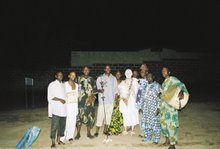
Itefa in Nigeria
Orunmila eriwo ya!
Ifa thoughts and philisopy by Ifálólá Aṣàyẹ́wòró Sanchez.

This Poem Called Life
Like this? Consider buying my book
!! Search here for past articles !!
Recommended Ifa reading for Awo's and Devotees
Translate
Reposting this blog
It's come to my attention that my blog has been reposted to other places on the internet, this is fine under the following conditions.
1. My work is copyrighted (except Odu Ifa, which no one owns) and rights always remain with me.
2. Please clearly site me as the author of the piece so people do not think it's your own.
3. A link must always be included to this blog so people know where it came from. http://ifalola.blogspot.com
In the spirit of sharing and respect for my time and energy, please do not violate these terms. Ifa will also be unhappy.
1. My work is copyrighted (except Odu Ifa, which no one owns) and rights always remain with me.
2. Please clearly site me as the author of the piece so people do not think it's your own.
3. A link must always be included to this blog so people know where it came from. http://ifalola.blogspot.com
In the spirit of sharing and respect for my time and energy, please do not violate these terms. Ifa will also be unhappy.
Who is Ifálólá Olùálà Ìyẹ̀ré?
I realized that people might not know much about me, so I decided to add a short profile of who I am. I was born in '69 into a latino family in the US. My dad's family practiced the Orisa tradition, but I didn't find my way to the tradition until I was about 18. After finding a lucumi Ile and worshiping for several years, I was "rayado" in Palo Mayombe, later passing to Padre then Bakonfula. After some time I eventually fulfilled my obligation to initiate (kariosha/dosu) as a priest of Yemoja after which I received Pinaldo, all in the cuban tradition. After receiving my Awofakan and being told I had to pass to Ifa, no matter, I began studying Ifa and thinking about what that meant to me. My search began, when Henry Drewal, a friend, brought his Oluwo to lecture at his classes at University of Wisconsin, Madison, I realized I had found my Oluwo, Kolawole Oshitola, Ejiirosun. And so after two years of email and calls with Baba, consulting Yemoja and Ifa through Ita with direct confirmation about what I was going to embark on, I went and did my Itelodu (Itefa) in the Challenge area of Ibadan, Nigeria. I went with a good friend, a lucumi Awo Ifa, who became my Ojugbona (Ifajoko, Osa Ogunda).
It's been a wonderful ride with ups and downs, and I hope that with the support of my family and community I can continue writing, whatever doubts or hardships might come my way. May Ifa always guide us all to achieve long life, filled with Owo, Omo ati Ire gbogbo! Ase o!
Ifálólá Olùálà Ìyẹ̀ré omo Iwori Aweda
It's been a wonderful ride with ups and downs, and I hope that with the support of my family and community I can continue writing, whatever doubts or hardships might come my way. May Ifa always guide us all to achieve long life, filled with Owo, Omo ati Ire gbogbo! Ase o!
Ifálólá Olùálà Ìyẹ̀ré omo Iwori Aweda
Ifalola in Nigeria
Itefa in Nigeria